
Nikia Lopez
Strategic Partnerships | Revenue Systems | Growth
Why Partner Programs Fail When Companies Treat Them Like Marketing Campaigns
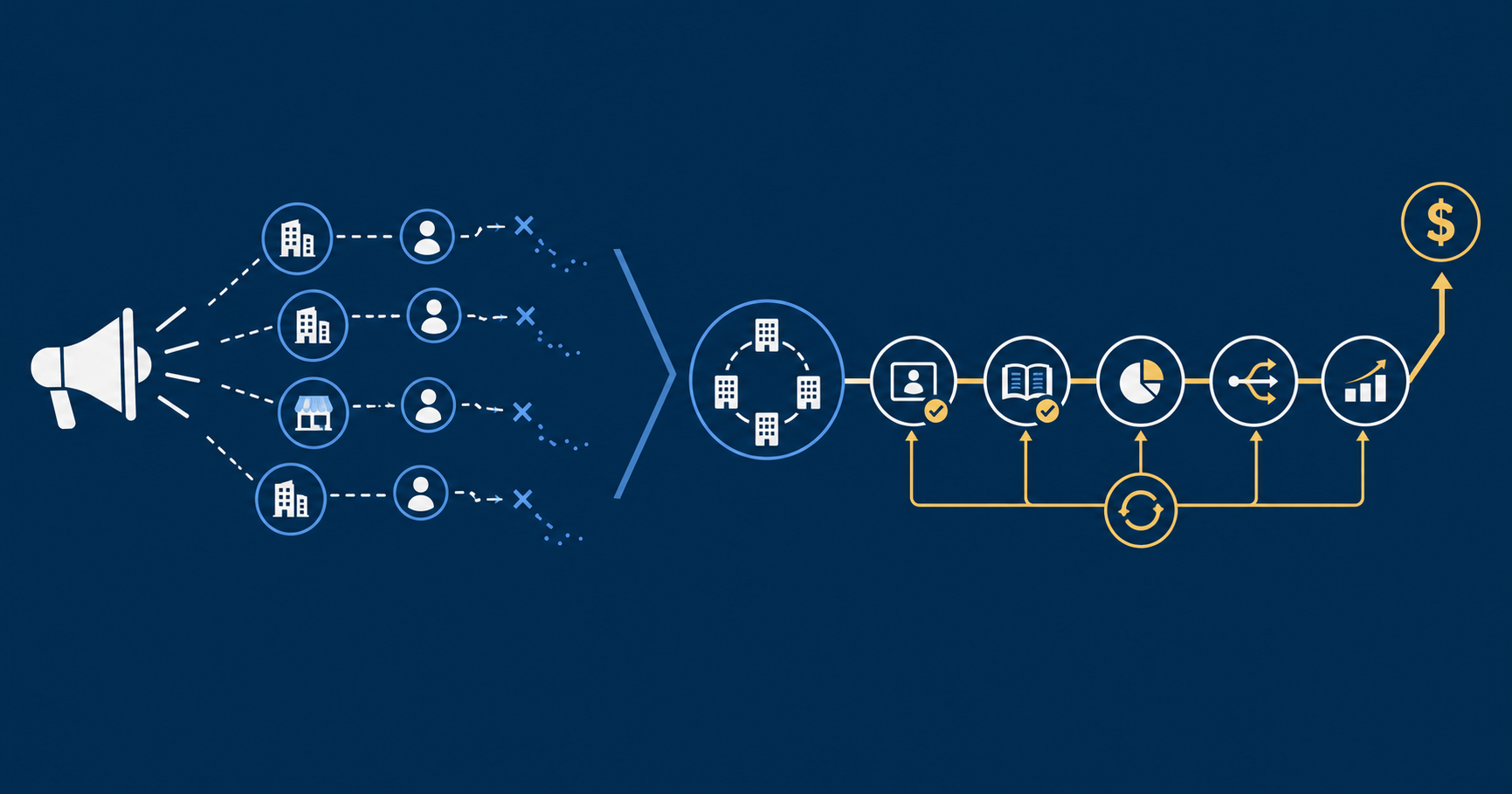
Many companies say they want to build a partner program when what they actually mean is that they want another source of leads.
They recruit affiliates, referral partners, technology partners, or channel partners. They create a landing page, establish a commission structure, send promotional materials, and wait for opportunities to appear.
For a short time, the program may generate activity. New partners join. Links receive clicks. Leads enter the funnel.
Then performance begins to slow.
Partners stop promoting. Lead quality becomes inconsistent. Sales teams question the value of the channel. Attribution becomes unreliable. Finance challenges the payouts. Leadership concludes that partnerships are not producing enough revenue.
The problem is often not the partnership strategy itself. The problem is that the company built a marketing campaign when it needed a revenue operating system.
Partner recruitment is only the beginning
Recruiting partners does not create a functioning partner program.
A partner can complete an application, receive a tracking link, and technically become “active” without ever understanding:
- Who the ideal customer is
- How the company evaluates lead quality
- What happens after a referral is submitted
- How long the sales process takes
- Which activities produce revenue
- Why one opportunity converts while another does not
- How the partner can improve performance
Recruitment fills the top of the partner funnel. It does not manage the entire partner lifecycle.
A scalable program must connect recruitment with qualification, onboarding, activation, enablement, performance management, optimization, and retention.
Marketing metrics do not tell the full story
Marketing teams frequently measure partner performance using clicks, form submissions, leads, calls, or cost per acquisition.
Those metrics are useful, but they do not explain whether the program is creating profitable growth.
A partner can generate significant volume while producing poor-quality opportunities, low conversion, high operational costs, or weak customer economics.
Leadership needs visibility into the complete path:
Partner activity → Lead or referral → Qualification → Routing → Sales execution → Conversion → Revenue → Profitability
If reporting ends at the lead, the company cannot determine which partners are creating real business value.
Broken handoffs destroy partner value
Partner programs often cross several departments:
- Marketing recruits or communicates with partners.
- Partnerships manages the relationship.
- Operations processes the lead or referral.
- Sales follows up with the prospect.
- Customer success manages the customer.
- Finance calculates payouts.
- Technology maintains attribution and integrations.
When ownership between these functions is unclear, opportunities are delayed, misrouted, duplicated, or lost.
The partner sees that referrals are not converting but may never learn why. The sales team receives opportunities without sufficient context. Leadership sees inconsistent results without understanding where performance is breaking down.
A strong partner program defines who owns every stage and what must happen before the opportunity moves forward.
Incentives must support profitable growth
Many programs establish commission rates before fully understanding their acquisition economics.
That creates a predictable problem: the payout encourages volume, while the company needs quality and profitability.
An effective incentive structure should account for factors such as:
- Customer quality
- Conversion
- Revenue contribution
- Customer lifetime value
- Acquisition cost
- Refunds or cancellations
- Margin
- Compliance
- Operational effort
The objective is not to pay the lowest possible commission. It is to create an incentive structure that rewards the partner for generating the outcomes the business actually values.
Partners need performance feedback
Companies sometimes expect partners to improve performance without giving them useful information.
Partners may receive a dashboard showing clicks and conversions, but no explanation of what differentiates a strong referral from a weak one.
Performance improves when partners understand:
- Which audiences convert
- Which messages attract qualified prospects
- Where opportunities are being rejected
- How quickly the company follows up
- Which products or offers perform best
- What they should change next
Partner education should be based on actual performance data, not generic promotional materials.
The program needs an operating cadence
Partner programs rarely improve through occasional check-ins.
They need a consistent management rhythm that reviews:
- Partner recruitment and activation
- Pipeline and revenue contribution
- Conversion by partner and source
- Lead or opportunity quality
- Sales follow-up
- Attribution accuracy
- Payouts and profitability
- Underperforming stages
- Recommended actions
This operating cadence turns reporting into decisions and decisions into measurable improvements.
What a partner operating system looks like
A complete partner operating system includes seven connected stages:
- Strategy: Define the partner model, ideal partner, customer, value proposition, and financial objectives.
- Recruitment: Identify and qualify partners based on fit and revenue potential.
- Onboarding: Establish expectations, processes, technology, and rules of engagement.
- Activation: Help partners complete the actions required to generate their first opportunity.
- Enablement: Provide messaging, education, tools, and performance feedback.
- Revenue execution: Connect referrals to qualification, routing, sales follow-up, conversion, and customer outcomes.
- Optimization: Use attribution, economics, and performance data to improve the complete system.
Each stage affects the next. Weak onboarding reduces activation. Poor routing damages conversion. Incomplete attribution leads to incorrect investment decisions. Misaligned payouts reduce profitability.
That is why partnerships cannot be managed as an isolated marketing initiative.
What I learned from building at scale
While building and scaling an affiliate acquisition channel at Simple Insurance Leads, the work extended far beyond recruiting affiliates.
The channel had to connect partner traffic with consumer qualification, call routing, agent capacity, dialer infrastructure, quality assurance, attribution, conversion, payouts, revenue, and profitability.
That connected system helped scale the affiliate channel to more than $2 million in partner payouts while supporting a broader acquisition operation with more than $2 million in monthly media spend and an average close rate of approximately 30%.
The channel became scalable because its individual components operated as one revenue system.
The leadership question
The most useful question is not:
How many partners do we have?
It is:
How effectively does our partner operating system turn partner activity into profitable revenue?
Companies that answer that question can identify where value is being created, where it is being lost, and what must change.
Partner programs do not fail simply because partners stop performing. They fail when the business has not built the systems required to help partners perform.